On this page
Types of bridge
| Type | How it works | Suits |
|---|---|---|
| Traditional | An artificial tooth held by crowns on both neighbouring teeth | Most gaps with sound teeth either side |
| Cantilever | Supported by a crown on one side only | Areas with little biting force, where only one neighbour is suitable |
| Resin-bonded | A tooth with small wings bonded to the backs of the neighbours | Some front teeth, with less preparation of neighbouring teeth |
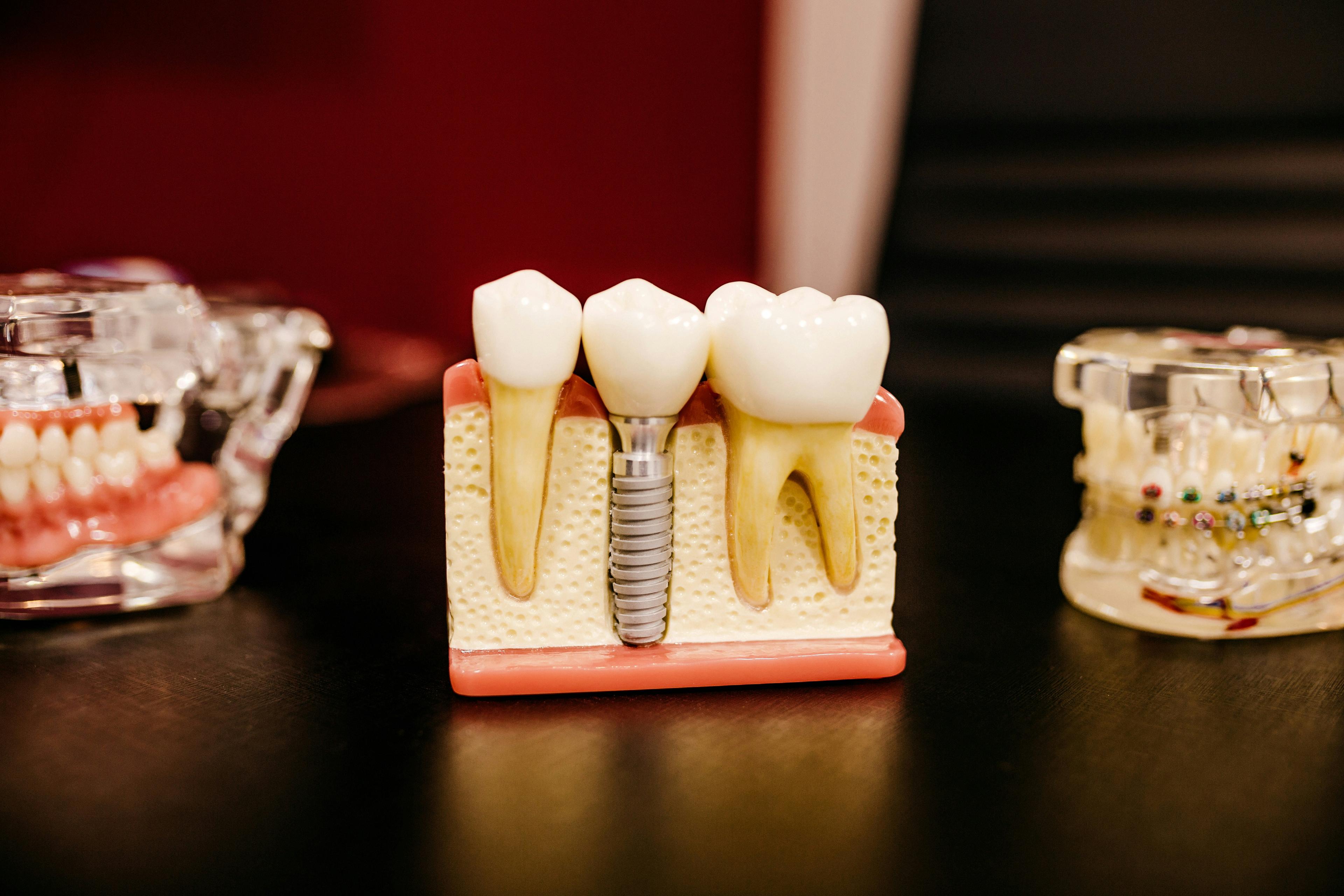
| Implant-supported | Anchored by dental implants instead of natural teeth | Several missing teeth, or where neighbours are not suitable |
Your dentist will examine your teeth and gums, take X-rays and explain which type, if any, is right for you. A bridge is a good fit when the teeth on either side of a gap are strong and healthy and you want a fixed, non-removable solution.
What the treatment involves
Assessment
The dentist checks the teeth either side of the gap, your gums and your bite, and talks through your options and costs.
Preparing the supporting teeth
Under local anaesthetic, the neighbouring teeth are shaped so crowns can fit over them.
Impressions and a temporary bridge
An impression or scan records your teeth, and a temporary bridge protects the area while yours is made.
Fitting the bridge
At the next visit the permanent bridge is checked for fit, shade and bite, then fixed in place.
Review
You return for a check, and are shown how to clean around and under the bridge.
Bridge, implant or denture?
| Topic | Bridge | Implant | Denture |
|---|---|---|---|
| How it is held | Crowns on neighbouring teeth | A post in the jawbone | Rests on the gums, sometimes clasped to teeth |
| Fixed or removable | Fixed | Fixed | Removable |
| Neighbouring teeth | Need to be shaped | Left alone | Untouched or clasped |
| Typical time | A few weeks | Several months | A few weeks |
Each has pros and cons. Read more in our guides to dental implants and dentures, or ask the dentist to talk you through them.
Caring for your bridge
- Brush twice a day with fluoride toothpaste, including around the edges of the bridge
- Clean under the artificial tooth every day, using a floss threader, an interdental brush or a water flosser
- Keep up regular check-ups and hygiene visits so the supporting teeth and gums stay healthy, because they carry the load of the bridge
- Avoid biting very hard things such as ice or hard sweets
- Contact us if the bridge feels loose, a tooth hurts or you notice a bad taste
When a bridge may not suit
- The teeth beside the gap are weak, heavily filled or have active gum disease
- The gap is long, so the supporting teeth would carry too much load
- You would prefer not to have healthy neighbouring teeth shaped
If a tooth has just been removed, our guide to tooth extractions explains healing and when replacement can be discussed.
Cost and payment
The cost of a bridge depends on the type, the number of teeth and the materials. After your examination the dentist gives you a written quote before you decide. Finance options may be available for eligible patients.