On this page
Signs you may need a root canal
- Severe toothache, especially a throbbing pain that wakes you at night
- Sensitivity to hot or cold that lingers long after the drink or food has gone
- Pain when you bite or press on the tooth
- A tooth that has darkened compared with the ones beside it
- A swollen or tender gum near the tooth, or a gum boil
These signs can also point to other problems, so an examination and X-ray are needed to confirm what is happening. See our guide to toothache if you are not sure.
What happens during treatment
Examination and X-ray
The dentist checks the tooth and the X-ray to see the roots and any infection.
Numbing the tooth
A local anaesthetic means you should not feel pain during treatment.
Opening the tooth
A small opening gives access to the inside of the tooth.
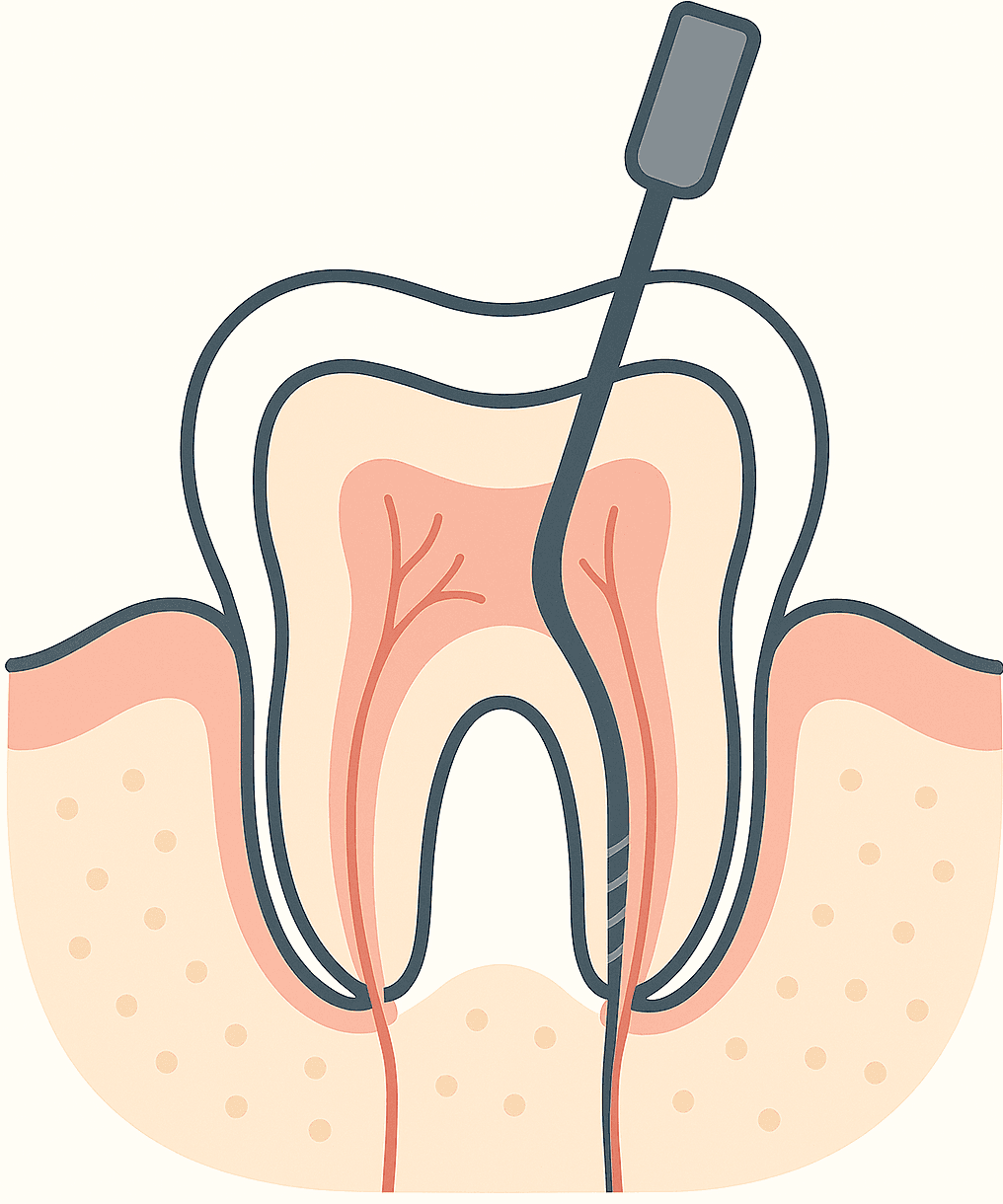
Cleaning the canals
Infected or damaged tissue is removed and the narrow canals are cleaned and shaped.
Sealing the tooth
The canals are filled and sealed to stop bacteria getting back in.
Restoring the tooth
A filling or a dental crown protects the tooth afterwards.
Root canal or extraction?
| Topic | Saving the tooth | Extraction |
|---|---|---|
| Aim | Keep your own tooth | Remove the tooth |
| After treatment | Needs a filling or crown | May need a bridge, implant or denture to fill the gap |
| Best when | The tooth can be restored | The tooth is too damaged or cracked to save |
| More on it | Described on this page | See tooth extractions |
Keeping your natural tooth, where it can be done well, is usually the better long-term choice. Your dentist will tell you honestly which is more likely to work for your tooth.
Afterwards: what to expect and how to look after the tooth
- The tooth and gum can feel tender for a few days, which painkillers taken as directed usually settle
- Avoid chewing hard food on that tooth until it has its permanent filling or crown
- Keep brushing and cleaning between your teeth as normal
- Return for the filling or crown as planned, because an unprotected tooth can crack
- Call us if pain returns, swelling appears or the filling feels loose
How to avoid needing one
- Brush twice a day with fluoride toothpaste and clean between your teeth
- Cut back on sugary snacks and drinks
- Have decay filled early, before it reaches the nerve
- Wear a mouthguard for contact sport, and replace cracked or leaking fillings
- Get toothache checked quickly instead of waiting
Cost
An emergency consultation is £50. The dentist explains the treatment you need, the alternatives and the cost before you decide to go ahead.