On this page
Why tartar needs professional removal
Plaque is a soft, sticky film of bacteria that builds up on your teeth all day. Brushing and cleaning between your teeth removes it. Any plaque left behind can harden into tartar, which is rough, firmly attached and cannot be brushed off.
Tartar collects most along the gum line and behind the lower front teeth. It irritates the gums, makes plaque easier to hold on to and can lead to swollen, bleeding gums. Only a dentist or hygienist can remove it safely.
What happens during the appointment
A quick check
The clinician looks at your teeth and gums and asks about any sensitivity or bleeding.
Scaling
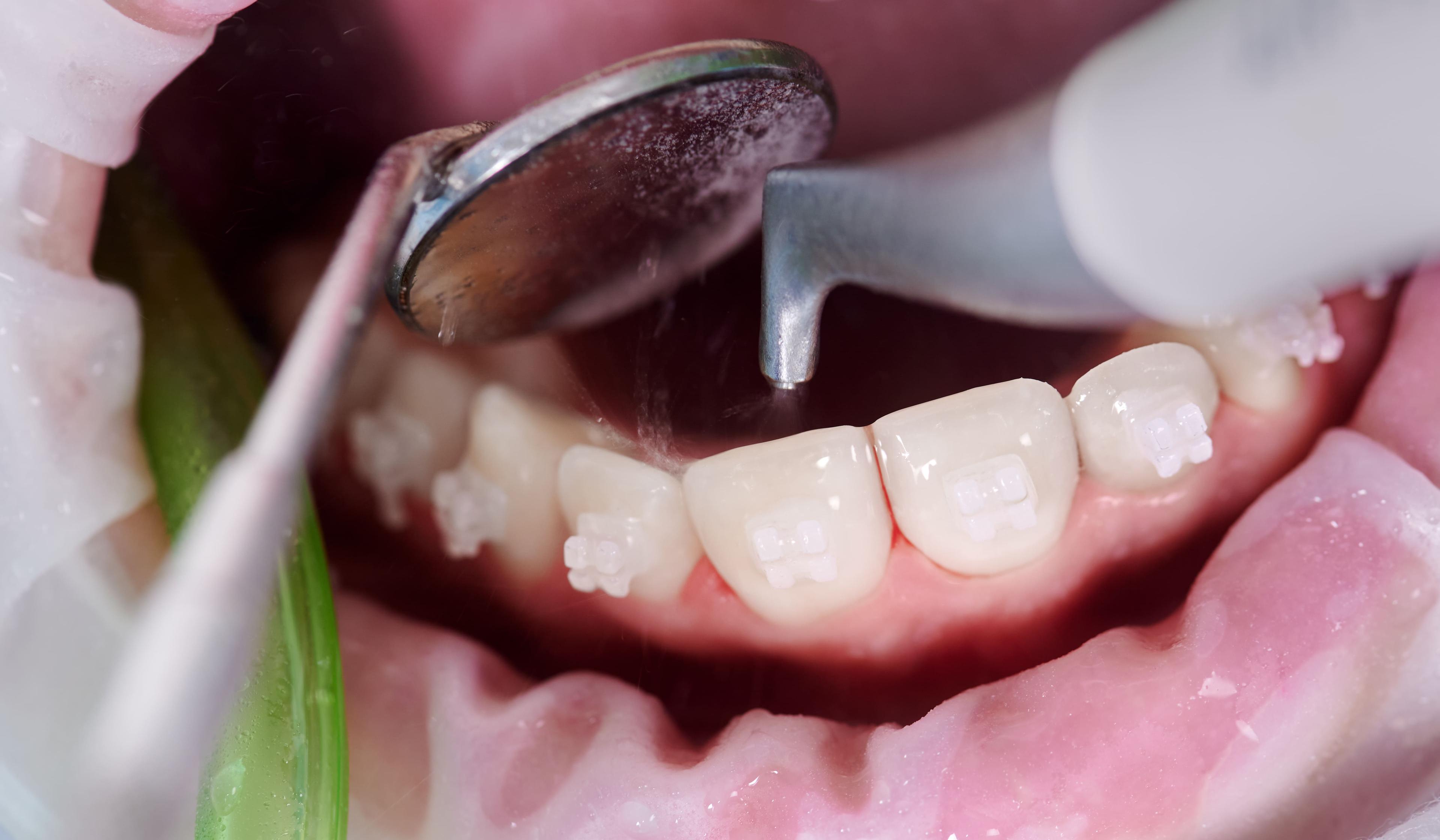
An ultrasonic scaler, which vibrates gently and sprays water, loosens tartar. Hand instruments reach any remaining spots.
Polishing
A soft rubber cup and a gritty paste remove surface stains and smooth the enamel.
Rinsing and cleaning between teeth
Your mouth is rinsed and the gaps between your teeth are cleaned.
Advice
You are shown how to keep the results, and told when to come back.
Does it hurt?
Most people find it comfortable. If your teeth are sensitive or your gums are inflamed, you may feel some tenderness or a little bleeding. Tell the clinician if anything is uncomfortable, because they can adjust their approach or use a numbing gel. Bleeding from sore gums is common and usually settles within days once the area is clean.
What you get from it
- Healthier gums, with less swelling and bleeding
- Fresher breath
- Surface stains from tea, coffee and smoking removed
- Teeth that feel smooth and are easier to keep clean
- A clearer view of your teeth at your next check-up
Scale and polish or Airflow?
| Topic | Scale and polish | Airflow cleaning |
|---|---|---|
| Removes hardened tartar | Yes | Not designed for heavy tartar |
| Removes surface stains | Yes, with polishing | Very effective |
| How it works | Ultrasonic scaler, hand tools and polishing paste | A jet of air, water and fine powder |
| Best for | Tartar build-up and gum health | Stains and soft plaque |
Many appointments combine both. Our guide to Airflow cleaning explains how it works.
Afterwards
- Your teeth may feel sensitive for a day or two, and a toothpaste for sensitive teeth can help
- Keep brushing twice a day, gently, and clean between your teeth daily
- You can eat and drink normally, though very hot or cold food may feel sharp at first
- Keep up your routine so tartar builds up more slowly
Signs you may be due a clean
- Rough, hard deposits you can feel with your tongue, often behind the lower front teeth
- Gums that bleed or look red and puffy
- Breath that does not freshen after brushing
- Visible yellow or brown staining along the gum line
- It has been longer than your dentist advised since your last one
Smokers, people prone to gum problems and those who build up tartar quickly are often advised to come more often. If your gums are already swollen, a clean is an important first step, and the dentist will explain whether you need more, as in our guide to gum disease treatment.
Cost and payment
The cost of a scale and polish depends on how much cleaning your teeth need. Ask the team when you book, and nothing is done without you agreeing to it first.